
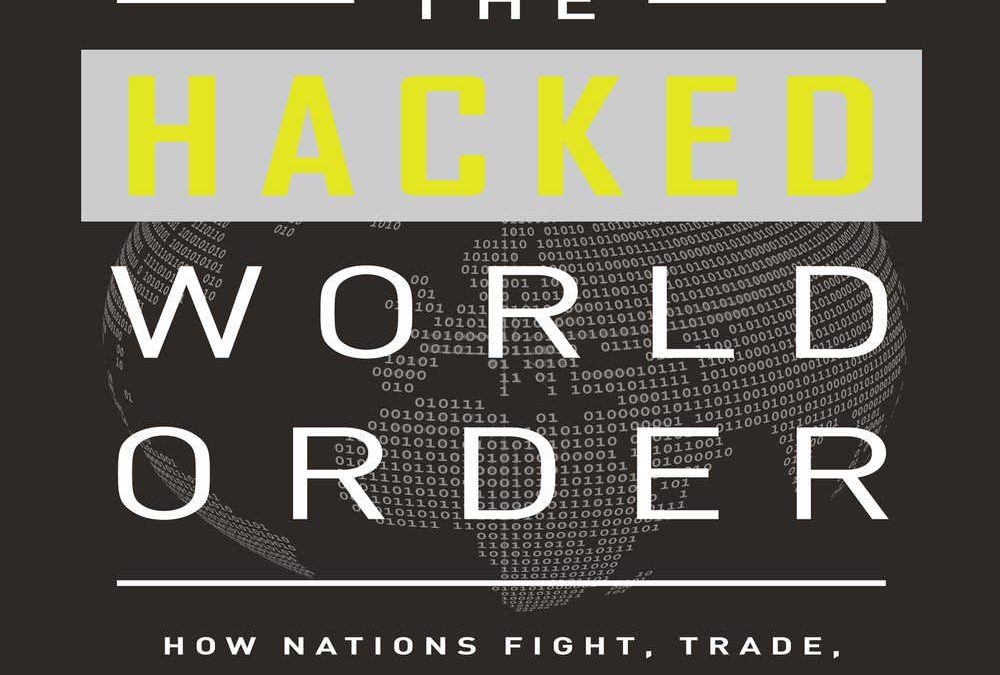
The Big Idea: Cyberspace has become a battleground where nations fight for power, information, and control—with profound implications for everyone.
Adam Segal, director of the Digital and Cyberspace Policy Program at the Council on Foreign Relations, examines how nation-states use cyber capabilities for espionage, warfare, surveillance, and geopolitical competition. The book reveals how digital technology fundamentally changed international relations and security.
Segal explores cyber operations by the United States, China, Russia, and other nations, showing how governments exploit digital infrastructure for intelligence gathering, economic advantage, and political influence. From industrial espionage to election interference to critical infrastructure attacks, the cyber domain represents a new frontier of state power.
What Works: Segal brings expertise in both cybersecurity and international relations, making complex geopolitical dynamics accessible. The book provides crucial context often missing from tech discussions—not just corporate surveillance but government surveillance, not just platform power but state power.
The examination of different national approaches proves illuminating. China’s “Great Firewall” and digital authoritarianism contrast with Western models, raising questions about internet governance and digital sovereignty. Segal avoids simplistic good-guys-versus-bad-guys framing, showing how all major powers engage in cyber operations.
Key Concept: Segal introduces the idea of “cyber persistence”—constant, ongoing cyber operations that blur the lines between peace and war. Nation-states continuously probe, infiltrate, and exploit each other’s digital infrastructure, creating a permanent state of low-level conflict.
What Doesn’t: Published in 2016, the book predates major events like the SolarWinds hack, increased ransomware attacks on critical infrastructure, and evolving cyber warfare tactics. The field moves quickly, dating some technical details.
Some readers may find the international relations framework academic or dense. Segal assumes some familiarity with geopolitical concepts, which could challenge casual readers. The book also focuses more on state actors than non-state threats like criminal organizations or terrorist groups.
Crucial Warning: Segal emphasizes that cyberspace lacks established norms, rules, or effective governance. Unlike nuclear weapons or conventional warfare, no international consensus exists on acceptable cyber behavior. This creates dangerous unpredictability and escalation risks.
Read this if: Understanding the geopolitical dimensions of technology matters. Essential for anyone in cybersecurity, international relations, policy, or national security. Also valuable for general readers wanting to understand state-level surveillance and cyber conflict beyond corporate data collection.
The Verdict: “The Hacked World Order” expands the technology critique from corporate platforms to nation-state power. After examining how companies exploit data and attention, Segal shows how governments weaponize digital infrastructure. The book reveals that privacy, security, and autonomy face threats from both corporate and state actors—often working together. Important reading for understanding the complete landscape of digital power.