
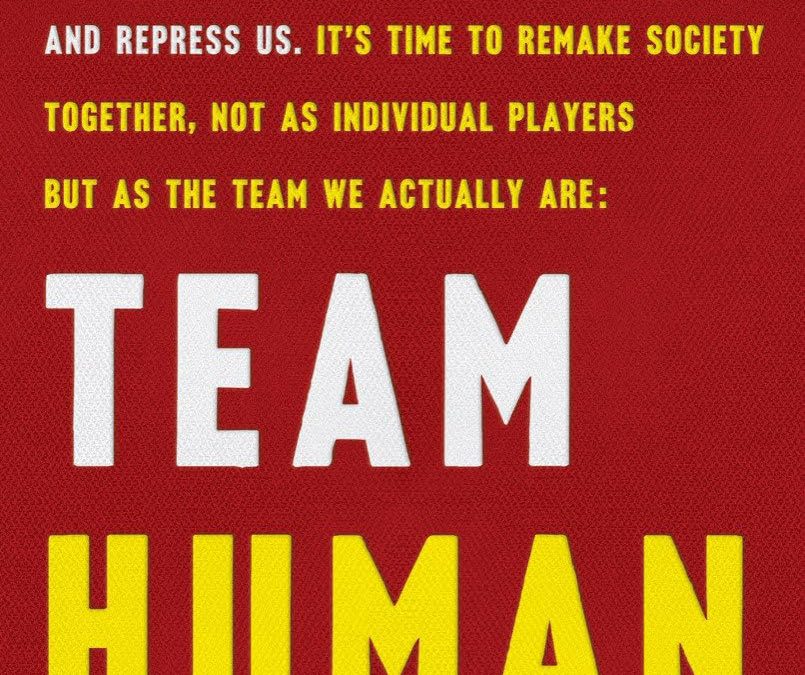
The Big Idea: Reclaim human values, connection, and autonomy in a world increasingly dominated by digital technology and algorithmic thinking.
Media theorist and digital culture critic Douglas Rushkoff presents a manifesto for reasserting human agency against technological determinism. Rather than accepting that technology dictates how people live, work, and relate to each other, Rushkoff argues for consciously choosing human values over technological imperatives.
The book challenges the assumption that efficiency, optimization, and automation are inherently good. Rushkoff contends that treating humans as data points to be optimized dehumanizes people and undermines the messy, inefficient, but essential qualities that make life meaningful—creativity, empathy, play, community.
What Works: Rushkoff writes with clarity and conviction, offering an accessible alternative to both techno-utopianism and dystopian despair. The short, essay-like chapters make complex ideas digestible without oversimplification. The book balances criticism of current trends with hopeful vision for better futures.
The emphasis on collective action and community proves refreshing. Rather than individualistic “personal responsibility” or waiting for government regulation, Rushkoff advocates for people working together to create alternative systems and resist dehumanizing technology.
Key Arguments:
- Technology isn’t neutral; it embeds values and shapes behavior
- Humans are social creatures; isolation serves platform profits, not wellbeing
- Efficiency isn’t everything; some valuable things are inherently inefficient
- Digital platforms extract value from human connection and sell it back as service
- Reclaiming autonomy requires conscious choices about technology use
What Doesn’t: The manifesto format means Rushkoff offers more philosophy than practical guidance. Readers seeking specific strategies or detailed policy recommendations might feel frustrated. The book identifies problems and proposes values but doesn’t always explain how to implement them in daily life.
Some critics argue Rushkoff romanticizes pre-digital life and underestimates how much people genuinely value aspects of digital technology. The call to “be more human” can feel vague without concrete definition of what that means.
Philosophical Foundation: Rushkoff draws on humanism, media theory, and systems thinking to argue that humans should program technology rather than letting technology program humans. This requires conscious awareness of how digital systems shape behavior and deliberate choices about which technologies to embrace or reject.
Read this if: Seeking a philosophical framework for thinking about technology and human values. Valuable for anyone feeling overwhelmed by technology’s demands and looking for permission to resist. Also useful for educators, designers, and policymakers trying to imagine alternatives to the current paradigm.
The Verdict: “Team Human” provides much-needed philosophical grounding after examining specific technological harms. While other books document problems, Rushkoff asks deeper questions about what kind of society people want and what values should guide technological development. The manifesto format won’t satisfy everyone, but the core message—humans should shape technology, not vice versa—offers an essential counterweight to deterministic thinking.