
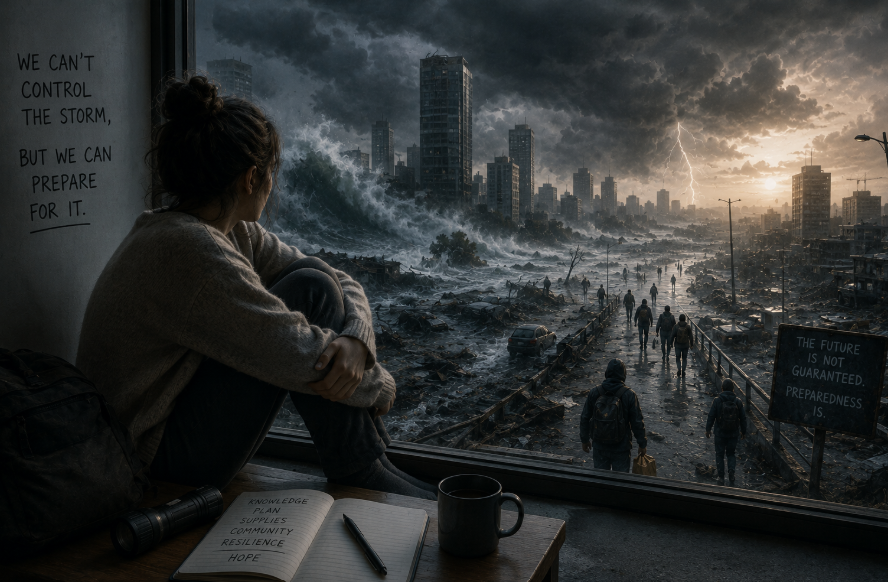
Every generation believes it knows how to live. But knowing how to live comfortably is not the same as knowing how to cope when comfort disappears.
Previous generations lived with fewer conveniences. They experienced shortages, interruptions, difficult weather, limited communication, and periods when help could not arrive immediately. They were not necessarily stronger people, nor were disasters easier for them. They simply lived closer to the possibility that life could suddenly become difficult.
Today, we live differently. Electricity, internet access, smartphones, online banking, transportation, supermarkets, delivery systems, and countless invisible infrastructures make everyday life remarkably convenient. We have also developed technologies that previous generations could hardly have imagined: weather forecasting, early-warning systems, emergency medicine, satellite communication, and sophisticated disaster-management systems.
In one sense, we are therefore better equipped than ever. Yet there is a strange contradiction. The more systems we depend on, the more difficult everyday life can become when those systems stop working.
What happens when there is no electricity for several days? When mobile networks fail? When roads become inaccessible? When supermarkets cannot be supplied? When the information we normally receive instantly suddenly disappears?
This does not mean we should romanticize the past. Previous generations suffered enormously from disasters, often without the medical knowledge, technology, infrastructure, and emergency services available today. Their resilience often came with a price that we should not wish to reproduce.
Perhaps the lesson is not that we need to become like previous generations. It is that we should preserve the resilience they developed while keeping the advantages we have created.
Preparedness should therefore become something ordinary rather than something we think about only after a disaster happens. People should know basic first aid. Families should have emergency supplies. Schools could teach children what to do during earthquakes, floods, fires, and other emergencies. Communities could develop systems for helping elderly people, children, and vulnerable neighbours. Individuals should know how to function for a short period without electricity, internet, or immediate outside assistance.
Because resilience is not simply a personality trait. **It is also a skill. **And skills can be learned before they are needed.
Perhaps the real question is not whether our generation is weaker than the generations before us.
Perhaps it is whether we have prepared ourselves for a world in which the things we take for granted may suddenly disappear.
Technology has made us powerful.
Preparedness determines whether we remain capable when technology fails.