
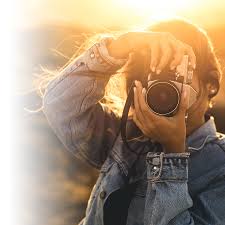
Filters are a new fashion that I have never really understood.
I have always thought that the purpose of taking a picture was to preserve a memory—a small souvenir of who we were at a particular moment in our lives. A photograph allows us, years later, to look back and say: This was me when I was twenty. This was me when I was thirteen. This is what I looked like at that time.
But when we take a photograph using a filter that changes our face, our skin, our features, or even the shape of our body, can we still honestly look at that picture years later and say, This was me? Perhaps the more accurate thing to say would be: This was me, with a filter.
And there is a difference.
A photograph has traditionally been connected to memory and identity. It captures something about how we existed at a particular moment. Of course, no photograph is ever a perfect representation of reality. A photograph is already a selection a particular angle, expression, moment, and frame. But filters take this one step further. They do not simply capture a moment; they modify the person who existed in it.
So I sometimes wonder why do we insist on altering even the memories we are going to leave for ourselves?
We are already constantly exposed to images of ourselves. We see ourselves in mirrors, in photographs, and on screens. But filters introduce something different: they allow us to create an edited version of ourselves and then preserve that version as if it were a memory of reality.
Years later, we may look at the photograph and remember the moment—the place, the people, the feelings—but the face we see may not truly be the face we had at that time. It is us, but it is also not entirely us.
And perhaps that is the strange contradiction of filtered photographs they preserve the memory while altering the person inside it.
Of course, there is nothing wrong with playing with images or using filters for entertainment. But I sometimes wonder whether we have started to confuse a memory of ourselves with an improved version of ourselves.
A photograph should not necessarily show us at our most beautiful. Perhaps its deeper purpose is to show us as we were. Because one day, when we look back at the person we used to be, maybe we will not want to see the person we edited for the world. Maybe we will want to see ourselves.