
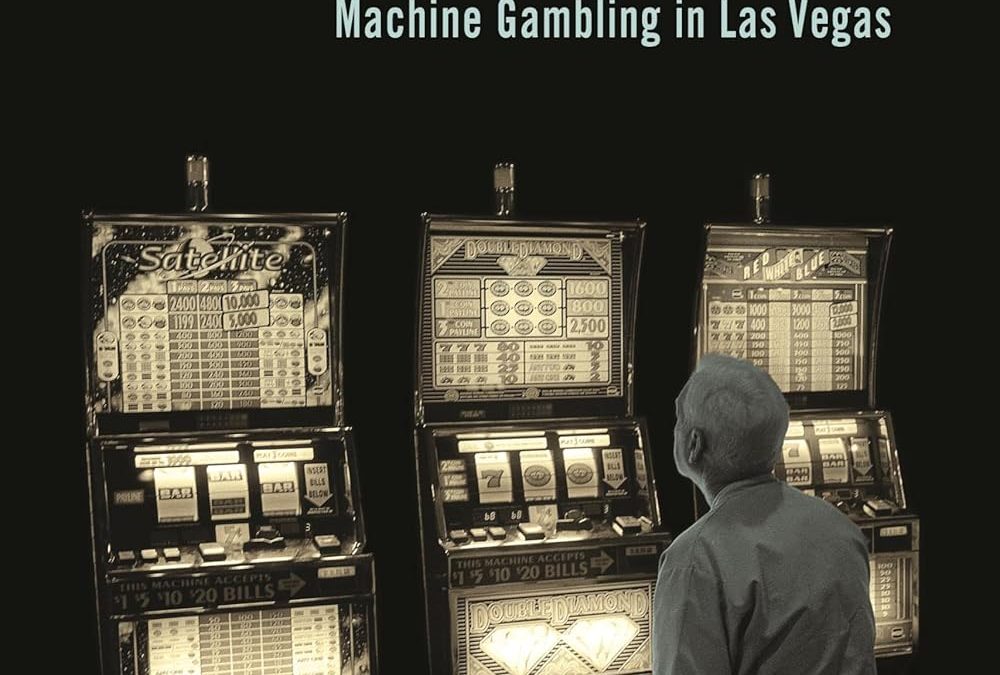
The Big Idea: Slot machines are engineered to create addiction—and those same techniques now power smartphones and social media.
MIT anthropologist Natasha Dow Schüll spent fifteen years researching the gambling industry in Las Vegas, producing this fascinating and disturbing ethnography of how slot machines are engineered to create and exploit addiction. The insights extend far beyond casinos to smartphone design, social media platforms, and digital applications.
Through interviews with gamblers, designers, casino executives, and addiction counselors, the book explores how gambling machines evolved from mechanical slots offering occasional jackpots to digital devices engineered for extended, continuous play. The goal isn’t the big win—it’s keeping people in their seats, playing steadily for hours.
What Works: Schüll’s anthropological approach proves immersive and non-judgmental. She avoids moral panic, instead showing empathy for gamblers while rigorously documenting the systems that exploit them. Technical detail about machine design fascinates while remaining accessible. A decade-plus of fieldwork provides depth rarely seen in tech criticism.
Key Revelation: Modern gambling isn’t primarily about winning money—it’s about achieving a dissociative state offering escape from anxiety, pain, or emotional discomfort. Machine gamblers aren’t chasing jackpots; they’re chasing “the zone,” a flow state where nothing else exists.
Design Techniques Creating Addiction:
- Variable ratio reinforcement schedules
- Near-miss programming
- Ergonomic chairs for extended sitting
- Casino layouts eliminating clocks and windows
- Loyalty programs tracking and exploiting player psychology
- Games designed to feel like winning even when losing
Critical Connection: The industry shifted from designing games of chance to designing “compulsion loops”—identical techniques now used in social media (endless scroll, variable rewards through likes, interrupting notifications) and mobile games (daily streaks, loot boxes, energy systems).
What Doesn’t: The book proves dense and academic at times, with extensive footnotes and theoretical frameworks that may slow casual readers. Some sections dive deep into technical gambling machine specifications that feel tangential. Published before the full flowering of smartphone addiction and social media manipulation, readers must make conceptual leaps to contemporary applications.
Read this if: Working in UX design, app development, or product management makes this crucial reading—it’s a masterclass in persuasive design and ethical implications. Equally important for parents concerned about screen time, psychologists studying behavioral addiction, and anyone feeling they use technology more than desired.
The Verdict: “Addiction by Design” proves revelatory, exposing psychological engineering behind not just gambling but the entire attention economy. After reading, slot machine design principles become recognizable everywhere: Instagram feeds, Candy Crush, Snapchat streaks, Netflix autoplay. The book asks fundamental questions about what kinds of human experiences should be designed for. In a smartphone-saturated world, these questions have never been more urgent.