
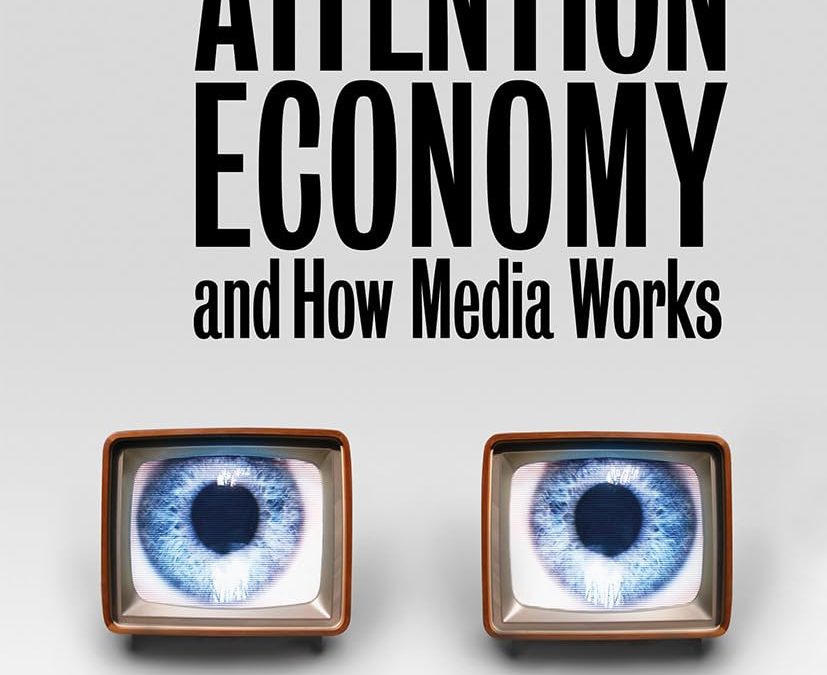
I’ll be honest — when I first picked up this book, I expected the usual marketing rhetoric dressed up in academic language. You know the type: a flashy title, a few buzzwords, and 200 pages of restating the obvious. Karen Nelson-Field’s The Attention Economy and How Media Works is not that book. Not even close.
Nelson-Field, a media scientist and founder of Amplified Intelligence, has spent years measuring something most of the advertising industry has been content to assume: whether people are actually watching the ads in front of them. What she found — backed by real biometric data from eye-tracking studies across millions of impressions — is both humbling and a little embarrassing for an industry that has been patting itself on the back for decades.
The central argument is disarmingly simple: not all media attention is equal, and the platforms eating up the most ad spend are often delivering the least of it. Social media feeds, for all their targeting sophistication and scale, are scroll-happy environments where an ad gets a fraction of a second of glance before vanishing. Television — old, supposedly dying television — holds attention longer and more completely than almost anything else. Nelson-Field doesn’t just say this; she measures it, and that’s what gives the book its backbone.
What I found genuinely refreshing is the way she refuses to flatter her audience. Marketers, she argues, have been seduced by metrics that are easy to measure rather than metrics that matter. Click-through rates, viewability scores, reach numbers — these are proxies, not proof. The industry built an entire economy around proxies and called it precision. Nelson-Field pulls back the curtain on that quietly, without being smug about it.
The writing itself is accessible without dumbing things down. She has a gift for analogy, and the science never feels like it’s being weaponized to intimidate. If anything, the book reads more like a well-organized lecture from someone who genuinely wants you to understand the material, not just be impressed by it. The pacing is tight, and she’s disciplined about not overstaying her welcome on any single point.
That said, the book has its limits. Some of the more nuanced questions — about how attention interacts with brand-building over longer timeframes, or how emerging formats like connected TV and short-form video fit into her framework — feel under-explored. And while the data is compelling, practitioners looking for specific, actionable playbooks may occasionally feel like they’re getting the “what” without enough of the “so now what.” It’s a research book at heart, which is both its greatest strength and an occasional source of mild frustration.
But here’s the thing: the industry needed this book more than it probably realizes. There’s a particular kind of courage in telling an entire ecosystem that its favorite channel is underperforming and that its measurement frameworks are largely built on sand. Nelson-Field does this not with polemic but with evidence — quietly, methodically, and convincingly.
If you work anywhere in the neighborhood of media planning, brand strategy, or advertising effectiveness, this is not optional reading. It’s the kind of book that changes the questions you ask in a media brief. And honestly, that might be the highest compliment I can pay it.