
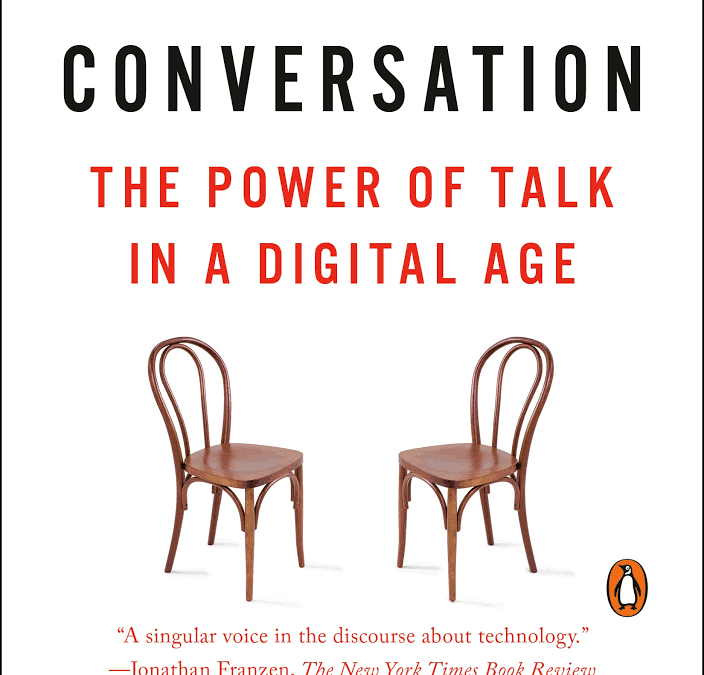
Sherry Turkle’s Reclaiming Conversation is a thoughtful and urgent examination of how digital technology is reshaping human communication. Building on her previous work, Turkle moves beyond a simple critique of screens to focus on what we lose when face-to-face conversation diminishes
Core Thesis: Turkle argues that spontaneous, uninterrupted conversation is the foundational human skill. It is the crucible where we develop empathy, self-reflection, creativity, and intimacy. The constant presence of phones and the lure of mediated communication (texts, social media) are eroding this skill, leading to a culture of perpetual distraction and emotional disconnect.
Key Insights and Structure:
The book is organized around three vital types of conversation:
Conversation with Others: Turkle presents compelling research showing that even the mere presence of a phone on a table can make discussions more superficial. She details how children learn empathy by seeing the flicker of emotions on a human face—a lesson missed when a parent is glancing at a screen. The chapters explore the impact on friendships, romantic relationships, and the workplace, where performance suffers without deep, collaborative talk.
Conversation with Self: This is perhaps the book’s most profound section. Turkle links the capacity for solitude—the ability to be content with one’s own thoughts—to the development of a secure sense of self. She observes that our constant connectivity acts as a barrier to boredom and self-reflection, leaving us uncomfortable with silence and less capable of knowing our own minds.
Conversation with Society (The “Bigger Than Us” Conversation): Here, Turkle examines how digital habits affect our civic and educational spaces. Students, accustomed to curating their identities online, struggle with unscripted class discussions. The book argues that learning to listen and debate with people who hold different views requires the patience and nuance fostered by in-person conversation.
Reclaiming Conversation is a vital and timely read. It serves less as a polemic against smartphones and more as a rediscovery of what makes us human. Turkle reminds us that conversation, with its hesitations, silences, and raw emotions, is where we learn to connect, to think deeply, and to understand ourselves and others. The book is a persuasive call to action—to put down our devices, be present, and reclaim the fading art of talking, listening, and truly being heard.
Overall Impression: A compelling, research-backed, and deeply humanistic appeal to prioritize face-to-face interaction in an age of digital distraction. It encourages personal and collective reflection on how we want to live and connect.