
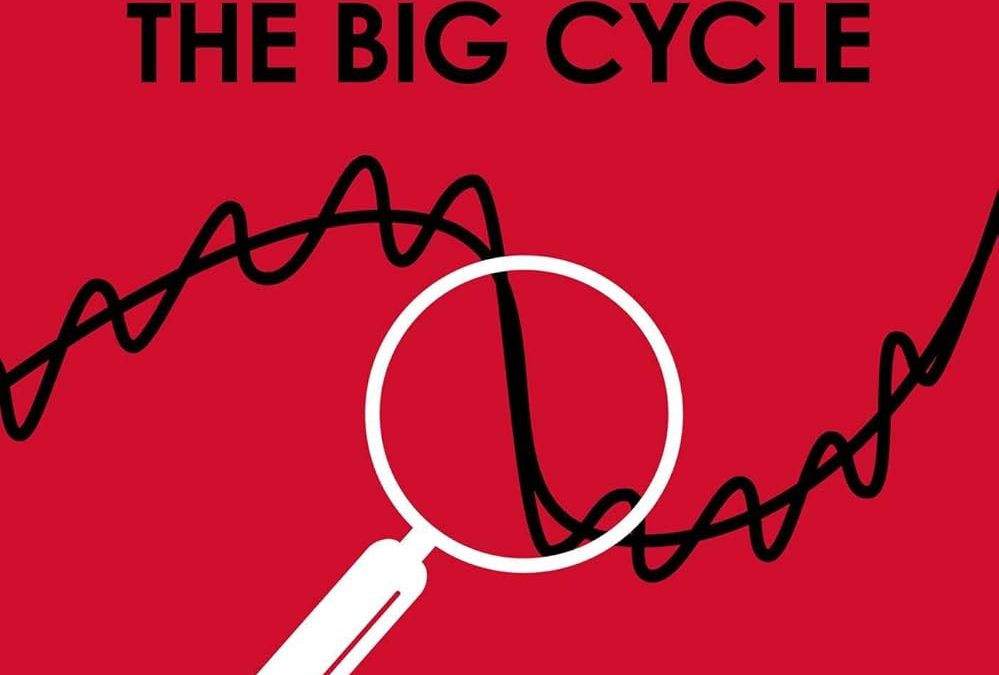
How Countries Go Broke: The Big Cycle presents a model of the long-term debt and economic cycles that the author argues are common to the history of major nations. The book’s central thesis is that the financial position of a country follows a predictable, recurring pattern driven by the accumulation and eventual deleveraging of debt.
The book’s content is structured to explain the sequential phases of this archetypal “Big Cycle.” It begins by establishing the role of credit as a fundamental driver of economic growth, enabling investment, consumption, and expansion beyond what current income alone would allow. In the early stages of a nation’s rise, this debt is characterized as productive, as it funds endeavors that generate future income and increase overall economic output.
A core section of the book details the transition from a sustainable cycle to an unsustainable one. The model posits that as a nation matures, the opportunities for high-return, productive investment often diminish. This leads to a shift where borrowing increasingly fuels financial speculation, consumption, and sustained government expenditures. During this phase, the overall level of debt grows faster than the income required to service it, creating systemic financial fragility.
The book meticulously outlines the indicators that signal a country is approaching a financial stress point. These include:
- High Aggregate Debt and Debt Service Burdens: When the costs of servicing existing debt begin to constrain new productive investment and government budgets.
- Large Wealth and Value Gaps: Significant disparities in financial assets and income among a population.
- The Role of Reserve Currency Status: The book explains how a dominant reserve currency can allow a nation to accumulate debt for a prolonged period, as it has greater capacity to borrow in its own currency.
The final phase of the cycle, which the book titles “How Countries Go Broke,” describes the period of deleveraging. The content explains that when the debt burden becomes too large, policymakers are typically left with a limited set of historically observed tools to manage the crisis. These are categorized as: 1) austerity (reducing spending), 2) debt defaults and restructurings, 3) the creation of large amounts of currency, and 4) the redistribution of wealth. The book analyzes the economic consequences of these measures, often involving periods of significant financial adjustment.
The tone of the book is analytical and model-based, framing national economic trajectories through the lens of historical patterns and quantitative measures. Its content remains focused on the mechanics of debt cycles, credit markets, and long-term economic indicators, providing a framework for understanding large-scale financial shifts.