
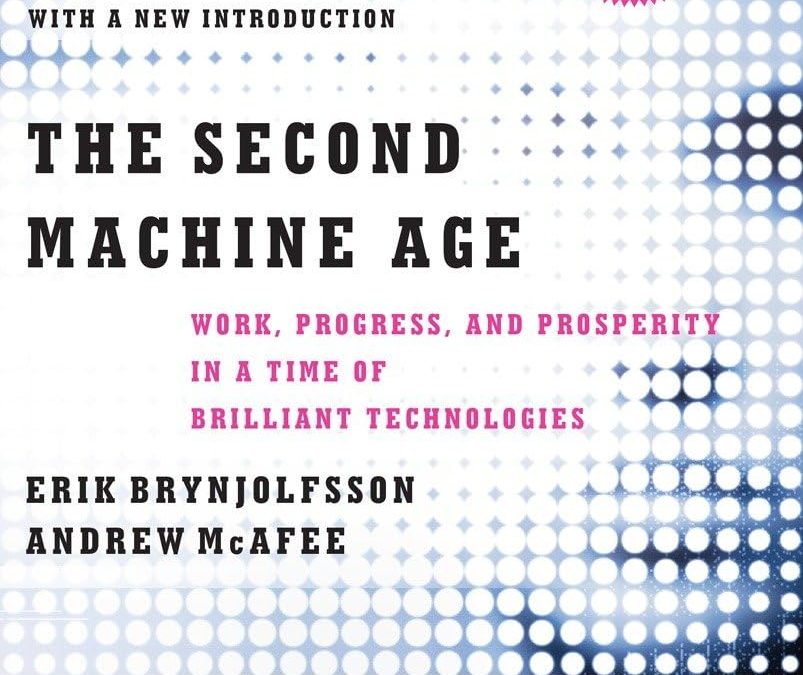
The Big Idea: Digital technologies create massive wealth, but distribution of that wealth remains deeply problematic.
MIT researchers Erik Brynjolfsson and Andrew McAfee present a compelling analysis of how digital technologies are transforming economics and society in ways that parallel—and potentially exceed—the impact of the first Industrial Revolution. The authors argue humanity has entered a “second machine age” where computers do for mental power what steam engines did for physical power.
The book introduces the concept of “the great decoupling”—the growing gap between productivity and median income, and between the top 1% and everyone else. While technological progress creates enormous wealth, it doesn’t automatically distribute that wealth broadly. Automation increasingly replaces not just blue-collar jobs but white-collar work as well.
What Works: Complex economic concepts become accessible through clear explanations and concrete examples—self-driving cars, chess-playing computers, automated customer service. The authors balance enthusiasm for technological progress with serious concern about distributional consequences. The framework of “bounty” (economic abundance) versus “spread” (inequality) provides a particularly useful analytical tool.
What Doesn’t: Some economists argue the authors overstate the pace of automation and underestimate human adaptability. Policy recommendations, while thoughtful, feel somewhat general and may not fully address the scale of disruption predicted. The focus primarily on the American context leaves global implications underexplored.
Key Recommendations: The authors propose education reform to develop uniquely human skills, entrepreneurship to create new opportunities, and policy interventions to ensure technological gains are shared more broadly.
Read this if: Understanding the future of work, navigating digital transformation, or grappling with questions about economic inequality matters professionally or personally. Essential for business leaders, policymakers, and anyone wondering how to remain relevant in an automated economy.
The Verdict: “The Second Machine Age” grounds technological optimism in economic reality. It addresses the crucial question: if technology creates such abundance, why aren’t more people benefiting? This book bridges the gap between optimistic future visions and harder questions about winners and losers in the digital economy.