
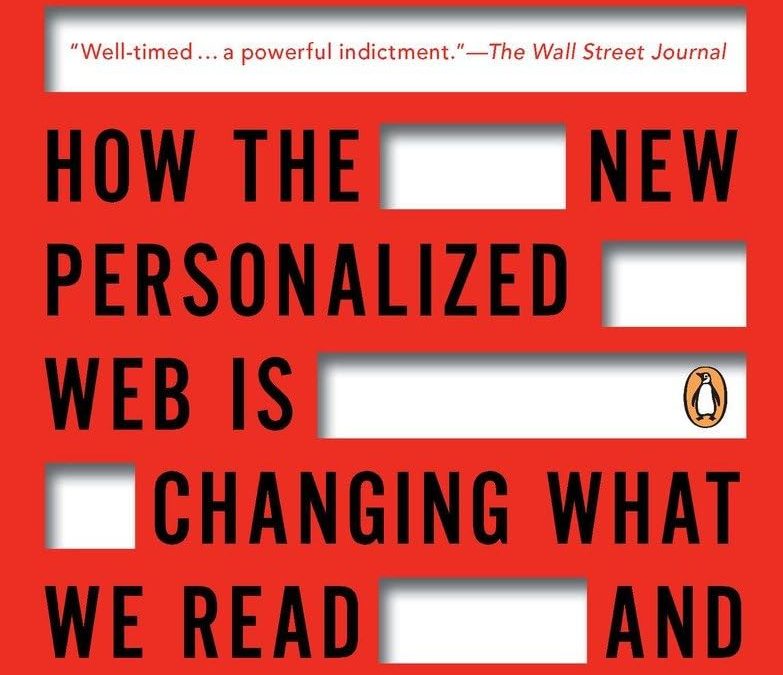
The Big Idea: Personalization algorithms trap users in bubbles of their own beliefs—often without awareness.
Internet activist and political organizer Eli Pariser sounds an alarm about one of the internet’s most insidious features: personalization algorithms that invisibly curate content, creating individualized information universes that distort perception of reality. Pariser coined the term “filter bubble” to describe this phenomenon.
Based on past clicks, searches, and behavior, systems like Google and Facebook predict what users want to see—and hide everything else. Two people searching for identical terms on Google can receive completely different results. Social media feeds might bear no resemblance between neighbors, even when following the same accounts.
What Works: Pariser proved remarkably prescient—the book appeared in 2011, years before “echo chambers” and “fake news” became household concerns. Accessible writing and concrete examples make the abstract concept of algorithmic curation easy to grasp. The book raises crucial questions about information diversity, civic health, and corporate responsibility in the digital age.
Central Warning: Filter bubbles undermine informed citizenship and democratic discourse. When algorithms show only information confirming existing beliefs and interests, users become isolated in echo chambers, less exposed to challenging viewpoints, and more vulnerable to misinformation.
What Doesn’t: More than a decade after publication, examples feel dated (references to Google Buzz, early Facebook features). Modern platforms like TikTok and advanced recommendation engines have created filter bubbles far more sophisticated than Pariser anticipated. Some critics argue he overstates algorithmic power and understates user agency—people actively choose to follow like-minded accounts and avoid uncomfortable content.
Read this if: Understanding how online information environments work matters. Especially valuable for parents, educators, journalists, and anyone concerned about political polarization and the quality of public discourse. Digital natives who’ve never known an unfiltered internet will find it particularly eye-opening.
The Verdict: “The Filter Bubble” remains essential reading for understanding how online information environments shape thinking without awareness. While predating many current debates about tech platforms and misinformation, it laid groundwork for these conversations. A wake-up call about invisible forces curating reality.